
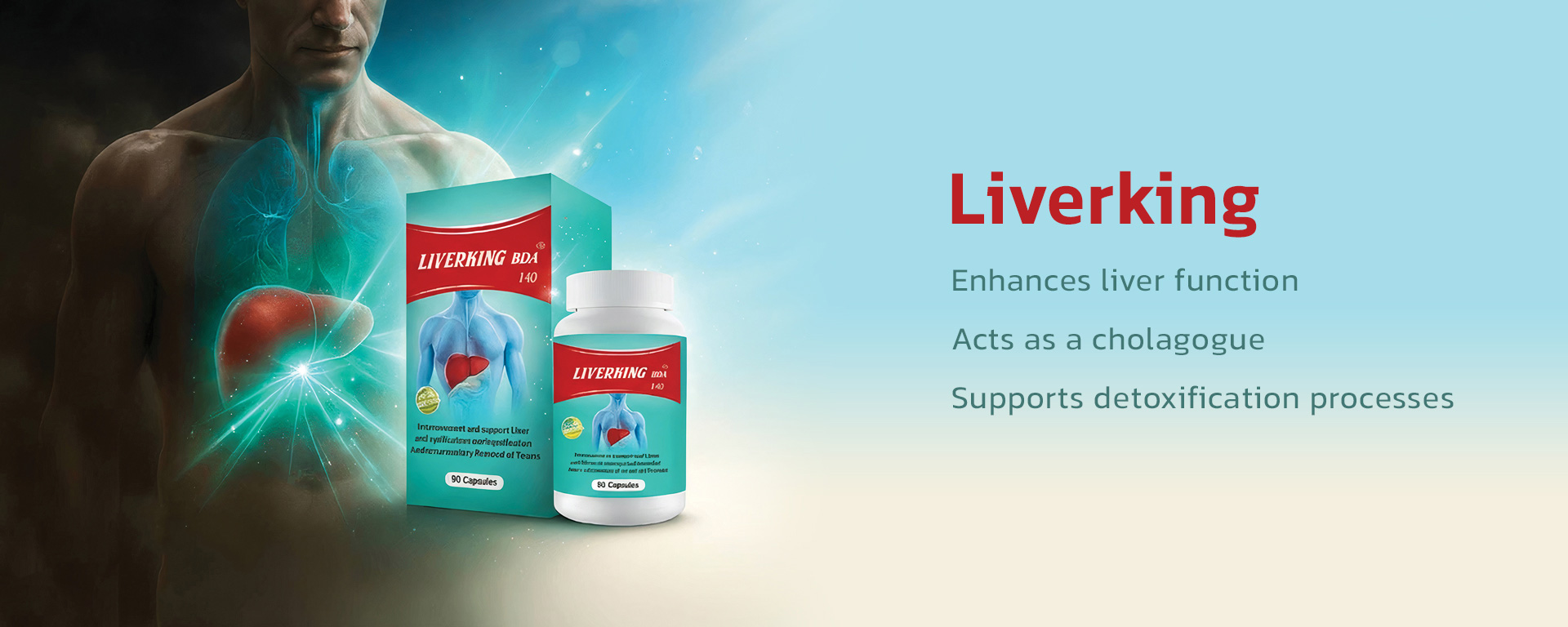
Liverking Capsule
Silybum marianum seed dry extract 80% …. 175 mg
Turmeric root (Curcuma longa) dry extract 95% … 50 mg
Artichoke leaf (Cynara scolymus) dry extract ……. 20 mg
*Standardized to contain 140 mg of active silymarin per capsule
- Enhances liver function
- Acts as a cholagogue (promotes bile secretion)Supports detoxification processes
Take one capsule 3 times daily, or as directed by your physician.
When the recommended dosage is followed, no side effects are expected, except in cases where the patient is sensitive to the plant ingredients in the medication. In some instances, consumption of this drug may lead to symptoms such as nausea, vomiting, or skin sensitivities.
- Silymarin may antagonize the effects of yohimbine and phentolamine.
- Co-administration with butyrophenones or phenothiazines may reduce lipid peroxidation.
- Contraindicated in patients with biliary calculi (gallstones) or peptic ulcers.
- Turmeric may impair blood clotting and increase bleeding or bruising risks.
- Interaction with anticoagulants, antiplatelets, heparin, thrombolytics, and low-molecular-weight anticoagulants is possible.
- Not recommended for patients with biliary obstruction.
- Artichoke may trigger allergic reactions in individuals sensitive to plants of the Asteraceae family (e.g., chamomile, daisy, parsley).
- Discontinue use in case of hypersensitivity and consult a physician or pharmacist.
- Not recommended during pregnancy and lactation.
- Consult a physician before use if undergoing medical treatment or taking other medications.
Store below 30°C, protected from light and moisture, and keep out of reach of children.
Pharmacological effects and mechanism of action
Silybum marianum
Silybum marianum is a well-known hepatoprotective medicinal plant, widely used in the treatment of liver disorders such as hepatotoxicity due to metabolic toxins (e.g., alcohol and mycotoxins), post-hepatitis complications, chronic liver failure with hepatocellular degeneration (e.g., cirrhosis), fatty liver, and mild hepatic dysfunctions. The hepatoprotective effects are primarily attributed to flavonolignans found in its seeds, especially silymarin, the major active compound. Silymarin inhibits toxin binding to hepatocyte receptors, enhances cell membrane resistance, and prevents toxin penetration into liver cells. Additionally, silymarin stimulates RNA polymerase A, increasing mRNA synthesis in hepatocytes, which promotes protein biosynthesis and the regeneration of liver cells. It also exhibits hypolipidemic activity by reducing VLDL and LDL levels while increasing HDL, thereby improving lipid profiles. Studies show that silymarin helps maintain glycogen and mRNA structure within hepatocytes and stabilizes hepatic enzyme activity. It also provides protection against drug-induced hepatotoxicity (e.g., indomethacin, isoniazid, lorazepam, clofibrate).
Silymarin inhibits leukotriene synthesis, contributing to its anti-inflammatory effects, beneficial in conditions such as cirrhosis and liver fibrosis. It also stimulates RNA polymerase I, boosting ribosomal protein synthesis and aiding in liver cell repair — especially crucial in mycotoxin detoxification. Furthermore, it acts as a potent antioxidant, capable of scavenging free radicals.
Turmeric (Curcuma longa)
Turmeric is a widely used medicinal herb with hepatoprotective, lipid-lowering, anti-thrombotic, and anti-inflammatory properties. It is recognized as a powerful antioxidant and exhibits antitumor and antimicrobial effects. studies indicate that turmeric inhibits prostaglandin production, likely by suppressing leukotriene biosynthesis and influencing prostaglandin pathways. Its cholagogue activity is mainly due to its yellow pigments, particularly curcumin (di-feruloylmethane). The volatile oil of turmeric, especially para-tolyl methyl carbinol, also promotes bile secretion. Both the volatile oil and pigment compounds of turmeric show antiseptic properties. It is used for rheumatic pain relief, topical treatment of skin inflammation, and digestive issues such as indigestion, bloating, intermittent fevers, diarrhea, edema, common cold, and urinary tract inflammations.
Artichoke (Cynara scolymus)
Artichoke is a medicinal plant with diuretic, cholagogue, hypolipidemic, and hypocholesterolemic effects. It supports liver function and is used in the treatment of indigestion, nausea, and other digestive disorders.
Animal studies, particularly in rats, have demonstrated that both crude and purified extracts of artichoke increase bile secretion, reduce blood lipids and cholesterol, and promote liver cell regeneration by increasing binucleated hepatocytes and intracellular RNA levels. The main active compound, cynarin, contributes significantly to its hepatoprotective effects by promoting biliary excretion of sterols and enhancing bile production and flow, leading to lower serum cholesterol. While cynarin has been traditionally considered the primary agent, studies also highlight the role of monocaffeoylquinic acid derivatives such as chlorogenic and neochlorogenic acids. The combined action of various acids and alcohols in the plant helps regulate bile secretion and supports both liver health and lipid metabolism.
Liverking capsule contains Silybum marianum, Turmeric and Artichoke extracts, which have a protective and restorative effect on liver cells, helping to maintain the health and normal function of the liver. By increasing the secretion and excretion of bile, this product helps to cleanse the liver and more effectively eliminate toxins from the body, and prevents the destruction of liver cells caused by toxic agents. Liverking is recommended as a useful supplement for maintaining the health and normal function of the liver, improving fatty liver and chronic liver inflammation.
Product FAQs
در دوران بارداری و شیردهی، مصرف این کپسول توصیه نمیشود. قبل از مصرف، با پزشک مشورت کنید.
این کپسول برای کودکان زیر ۱۲ سال توصیه نمیشود.
معمولاً خیر، اما اگر داروی خاصی مصرف میکنید بهتر است با پزشک مشورت کنید.
قبل از شروع مصرف حتما با پزشک مشورت کنید چون ممکن است تاثیر داروها تغییر کند.
بله، با تقویت عملکرد کبد به دفع سموم کمک میکند.
بله. کنگر فرنگی موجود در لیورکینگ به ترشح بیشتر صفرا کمک میکند، که میتواند عملکرد هضم چربی را بهبود دهد و از تجمع صفرا جلوگیری کند.
بله. چون با افزایش سن عملکرد کبد ممکن است کاهش یابد، لیورکینگ با تقویت عملکرد کبد میتواند به حفظ سلامت عمومی کمک کند.
بله. وقتی عملکرد کبد بهبود پیدا کند، بدن بهتر سموم را دفع میکند و این میتواند باعث کاهش خستگی مزمن شود.
معمولاً مصرف برای دورههای ۴ تا ۸ هفتهای توصیه میشود. اگر نیاز به مصرف طولانیمدت باشد، باید هر ۲ تا ۳ ماه یک وقفهی ۲ هفتهای داده شود و تحت نظر پزشک ادامه پیدا کند.
به محض یادآوری، شیاف را استفاده کنید ولی اگر زمان مصرف بعدی نزدیک است، دوز فراموش شده را نادیده بگیرید.
Questions and answers
No reviews message